
Guide
How to Care for a Wooden Cutting Board
Cleaning, oiling, waxing, sanitizing and simple fixes. Everything you need to keep a hardwood cutting board in good shape for decades.
Some links in this guide are affiliate links. As an Amazon Associate we earn from qualifying purchases. It doesn't change your price, and we only list things we'd use on our own boards.
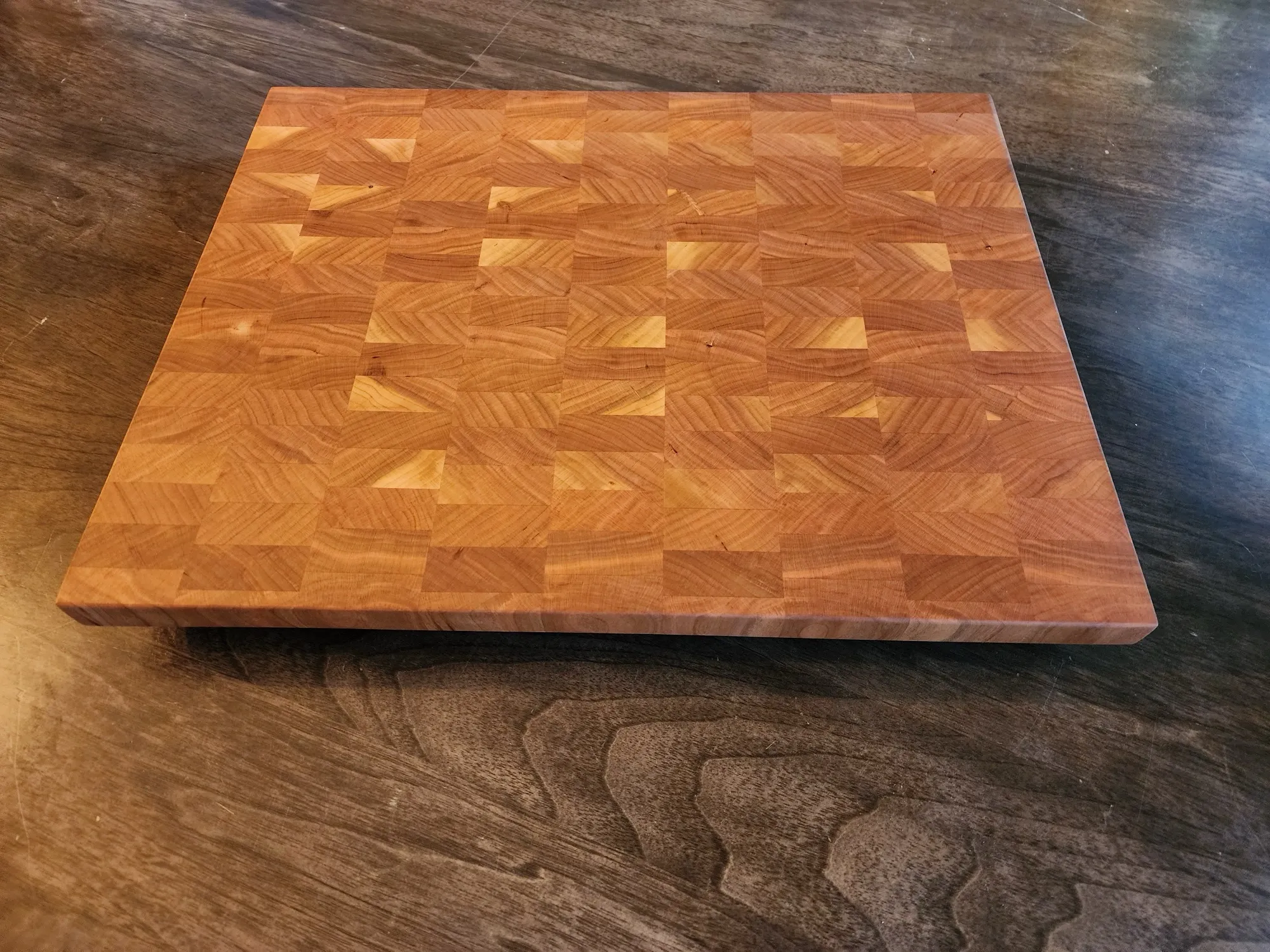
A well-made hardwood cutting board can easily outlast every other tool in your kitchen. It doesn’t need much: a quick wash after you use it, a coat of oil when it starts to look dry, and a few habits that keep water from doing damage.
This guide covers everything we tell people who buy one of our boards. It works for end-grain and edge-grain boards alike, and where the two need different care, we point it out.
What you’ll need
You don’t need much. A bottle of board oil, something to seal it with, and a couple of clean cloths will cover almost everything in this guide. We go through the options for oil and wax below.
Everyday cleaning
Clean the board soon after you use it. Food that dries on takes more scrubbing, and more scrubbing means more water.
- Scrape it off. Push crumbs, juice and scraps into the trash with a bench scraper or the back of a knife (not the edge).
- Wash with warm, soapy water. A drop of regular dish soap is fine. Scrub with a sponge or a stiff dish brush, which gets into knife marks better.
- Wash both sides, even if you only cut on one. Wetting one face and not the other is the most common cause of a board cupping or warping.
- Rinse quickly under the tap. Don’t hold it under running water longer than you need to.
- Towel it off, then stand it on edge to finish drying, ideally in a drying rack or leaning against the backsplash. Don’t leave it lying flat on a wet counter.
Oiling: the most important habit
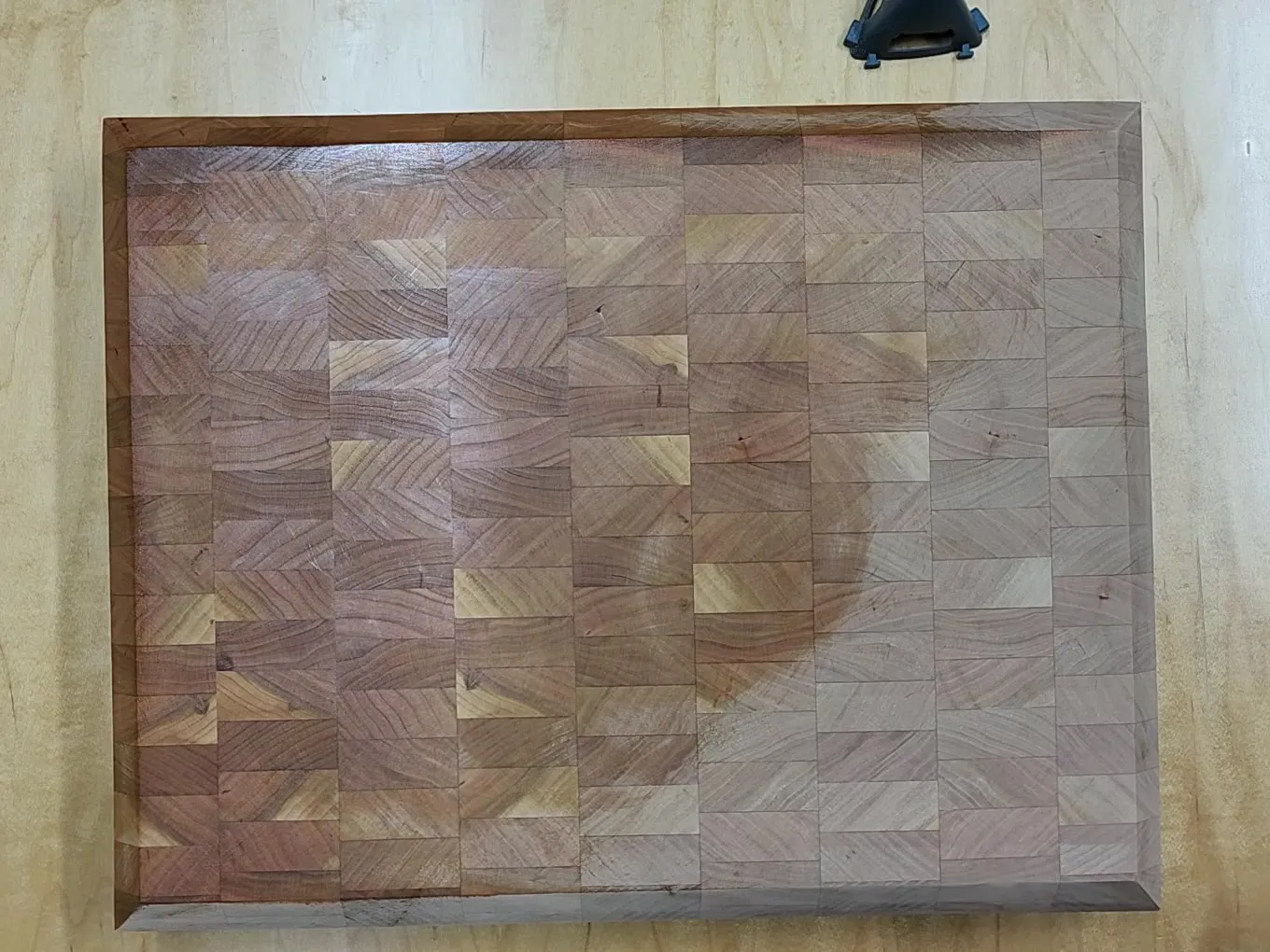
Wood naturally loses moisture over time. Oil soaks into the fibers and fills them, so water, juice and smells stay on the surface instead of soaking in. A well-oiled board resists stains and odors, wipes clean easily and is far less likely to crack.
When to oil
Use your eyes and a few drops of water:
- The water test. Sprinkle a few drops of water on the board. If they bead up, you’re fine. If they darken the wood and soak in, it’s time to oil.
- It looks dry. The color goes pale or chalky, or the surface feels rough or fuzzy.
- On a schedule. For a board in regular use, about once a month is a good rhythm. Use it daily or wash it a lot and every two to four weeks is better. A board that only comes out for parties can go a few months.
A brand-new board that wasn’t finished by the maker benefits from oil every day or two for the first week, then weekly for a month. Ours leave the shop fully oiled, waxed and cured, so you can start on the monthly routine.
What oil to use
Any oil you use must be food-safe and must not go rancid. That rules out most of what’s in your pantry.
| Oil | What it is | Good to know |
|---|---|---|
| Food-grade mineral oil | Clear, odorless, never goes rancid | The cheapest option and works well. Needs reapplying most often. |
| Board oil blends | Mineral oil with beeswax, coconut oil or other waxes | Soaks in like mineral oil, with a bit more water resistance. The easiest choice for most people. |
| Hardwax oils | Plant oils and waxes that cure into a tough finish | Lasts longer between coats, but needs days to cure before it’s used with liquids. |
| Olive, vegetable, canola or corn oil | Kitchen cooking oils | Avoid. They can go rancid in the wood and leave the board sticky and smelly. |
How to oil a board
- Start with a clean, completely dry board. If you just washed it, give it a few hours, or overnight if you can.
- Pour on a small puddle of oil and spread it with a clean cloth or your hand. Cover every surface: both faces, all four edges and the handle cutouts.
- Give the end grain extra. End-grain boards, and the ends of edge-grain boards, drink oil fast. Keep adding until the wood stops soaking it up right away.
- Let it soak in. Twenty minutes is the minimum. Several hours or overnight is better. Stand the board on edge so the bottom isn’t sitting in a puddle.
- Wipe off the excess with a clean, dry cloth. The surface should feel smooth, not wet or sticky.
- Let it rest before you use it, ideally overnight.
Waxing: sealing it in
Oil soaks into the wood. Wax sits on top of it. A thin coat of wax after oiling seals the surface so water beads up and rolls off, and it gives the board a soft satin sheen. It’s optional, but it makes the oil last longer and the board easier to keep clean.
- Oil first. Let the oil soak in and wipe off the extra. Waxing the next day is ideal.
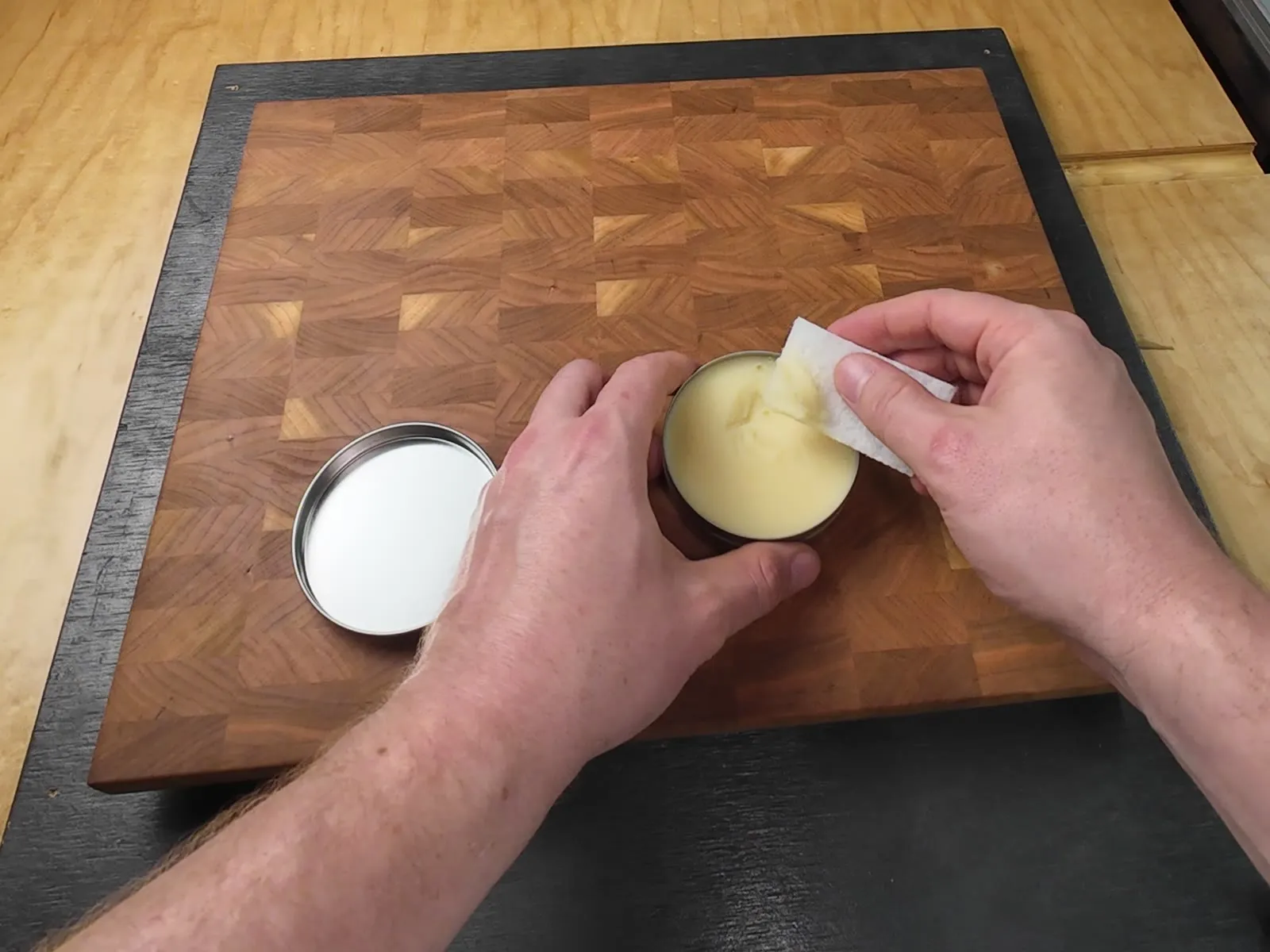
- Take a small amount of wax on a cloth or a non-scratch finishing pad. A little goes a long way.
- Rub it in with small circles over the whole surface, including the edges.
- Let it sit for 15 to 30 minutes.
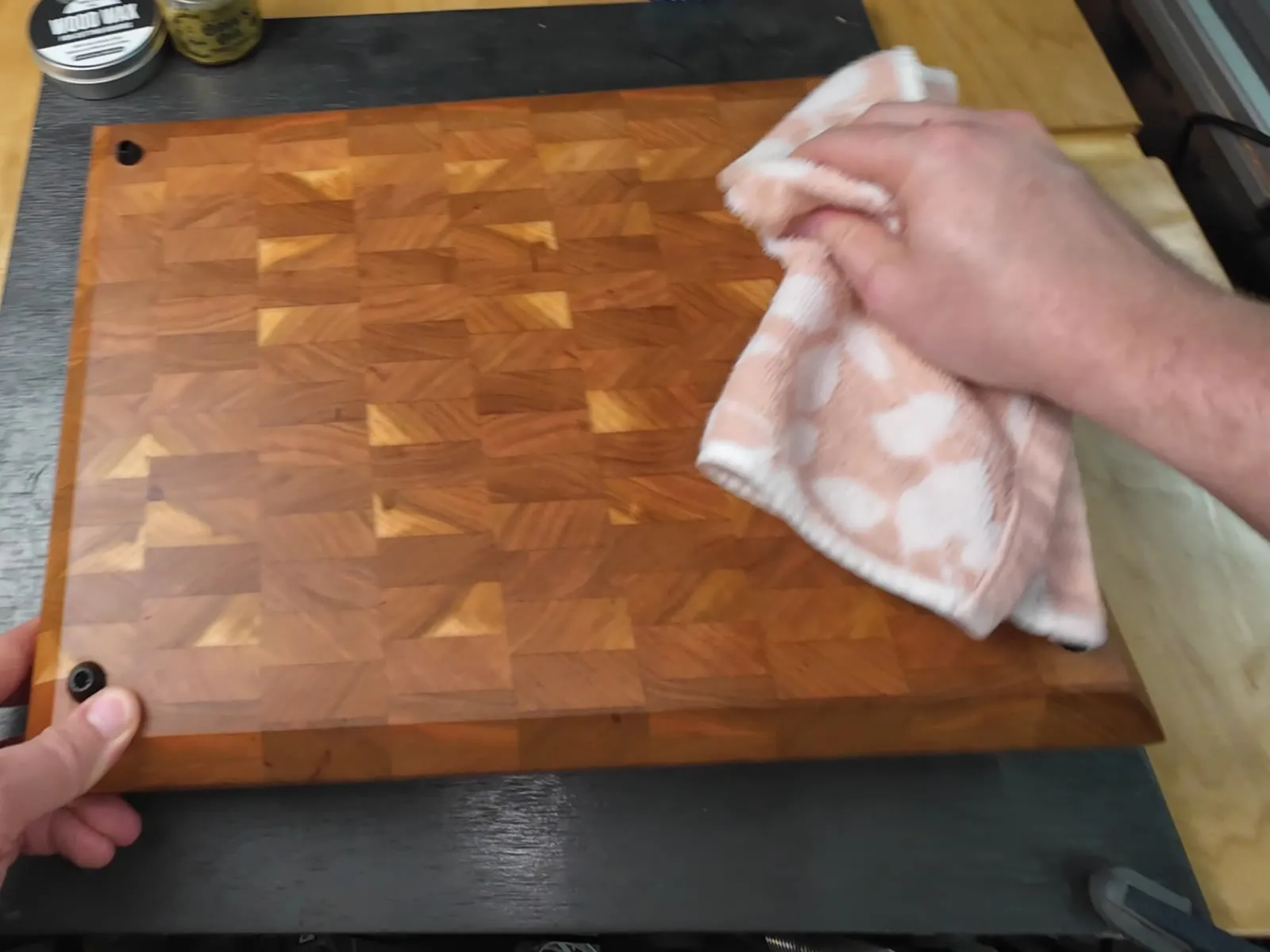
- Buff it off with a clean cloth until the surface feels smooth and dry, not waxy.
Oil, wax or board butter?
“Board butter” or “board cream” is simply oil and wax mixed together, so you can do both steps at once. It’s convenient for regular touch-ups. For a board that’s really dry, a proper oiling first and wax afterward does a better job.
| Oil | Wax | Board butter | |
|---|---|---|---|
| What it does | Soaks in and conditions the wood | Seals the surface and repels water | A bit of both in one step |
| Best for | Dry boards, new boards, after sanding | Finishing after oil | Quick monthly touch-ups |
| How it feels | Disappears into the wood | Smooth, satin sheen | Smooth, slightly waxy until buffed |
Deep cleaning, sanitizing and smells
After raw meat, poultry or fish
Wash the board right away with hot, soapy water. Then, if you want to sanitize it:
- Diluted bleach. The USDA recommends 1 tablespoon of unscented liquid bleach per gallon of water. Flood the surface, let it stand for a few minutes, rinse with clean water and dry it on edge. Stronger isn’t better; it just dries out and discolors the wood.
- Hydrogen peroxide. Pour regular 3% hydrogen peroxide over the surface, let it sit for a few minutes while it fizzes, then rinse and dry.
- White vinegar. A wipe with undiluted white vinegar is a gentle everyday option for light cleaning and odors.
Sanitizing dries out the wood, so give the board a coat of oil a day or two later. Many cooks also keep one board just for raw meat, which is a good habit if you can.
Smells and stains
For garlic, onion or fish smells and most stains:
- Sprinkle the board with a generous layer of coarse kosher salt.
- Scrub it in with the cut side of half a lemon, squeezing as you go.
- Let it sit for five minutes, then scrape it off, rinse and dry the board on edge.
For a stubborn smell, a paste of baking soda and a little water, left on for a few minutes, works the same way. Re-oil once the board is fully dry.
Fixing common problems
It feels fuzzy or rough after washing
That’s “raised grain”: water makes the loose fibers on the surface stand up. It’s most common in a board’s first few washes. Once the board is dry, sand it lightly with a fine sanding sponge (220 grit), wipe off the dust and give it a coat of oil. It usually stops happening after one or two rounds.
Knife marks and scratches
Every board picks up knife marks, and that’s fine. On end grain the fibers close back up and the marks mostly disappear. Edge grain shows them more over time. If they bother you, sand the surface with 180 grit and then 220, always with the grain, and re-oil. Most boards can be sanded like this many times over their lifetime.
Dark spots or mold
Small dark spots are usually trapped moisture. Try the salt and lemon scrub first. If they’re still there, sand the area until you reach clean wood, sanitize it and re-oil. Then look at how the board is drying; it almost always means it’s been left flat or put away wet.
Cracks, splits or warping
These almost always come from water: a soak in the sink, the dishwasher, or drying flat on one side. Keeping the board oiled and drying it on edge prevents nearly all of them. A slight rock can often be fixed by a woodworker. If one of our boards develops a problem, get in touch and we’ll take a look.
Worn or missing feet
Rubber feet wear out eventually. They’re cheap to replace and easy to screw in, and they keep the board from sliding while letting air get underneath.
End grain vs. edge grain care
Both styles get the same routine. The main difference is how much oil they need.
| End grain | Edge grain | |
|---|---|---|
| Knife marks | Fibers close back up, so marks fade | Marks show more over time |
| Oil | Drinks a lot, especially in the first few months | Absorbs less and stays oiled longer |
| Oiling frequency | Plan on more often, roughly every 2–4 weeks with daily use | About once a month |
| Water | More sensitive, so never let it soak | Still never soak it |
| Sanding marks out | Sand carefully; end grain tears out easily | Sands quickly and easily |
A simple care schedule
| When | What to do |
|---|---|
| After every use | Scrape, wash both sides, towel off, dry on edge |
| After raw meat | Wash, then sanitize with diluted bleach or hydrogen peroxide |
| When water soaks in | Oil it, let it soak, wipe off the excess |
| About monthly | Oil and wax (or board butter for a quick touch-up) |
| Once or twice a year | Light sanding if needed, then a heavy oiling and fresh wax |
Frequently asked questions
Can I use olive oil or coconut oil?
Not regular cooking oils. Olive, vegetable, canola and corn oil can go rancid inside the wood and leave the board sticky and smelly. Food-grade mineral oil and purpose-made board oils won’t. Some board oils do contain fractionated coconut oil, a refined form that stays liquid and doesn’t spoil like the coconut oil in your pantry.
Is mineral oil safe on a cutting board?
Yes, as long as it’s sold as food-grade or USP mineral oil. It’s the most common cutting board oil for a reason: it’s odorless, flavorless and never goes rancid. Avoid mineral oil from a hardware store that isn’t labeled food-grade.
How often should I oil my board?
When water stops beading on the surface, or the board looks pale and dry. For most kitchens that works out to about once a month. End-grain boards and boards washed often need it more.
Can I cut raw meat on a wooden board?
Yes. Wash it with hot, soapy water right afterward and sanitize it if you like, as described above. Many cooks keep a separate board for raw meat just to be safe.
What about a board that’s been neglected?
Most dry, gray or stained boards can be brought back. Wash it, let it dry overnight, sand it with 180 and then 220 grit, and then oil it heavily several times over a few days until it stops soaking the oil in. Finish with a coat of wax.
Does this apply to serving and charcuterie boards?
Yes. Anything wooden that touches food (serving boards, spoons, salad bowls) gets the same treatment: hand wash, dry it well, keep it oiled.